Go Back

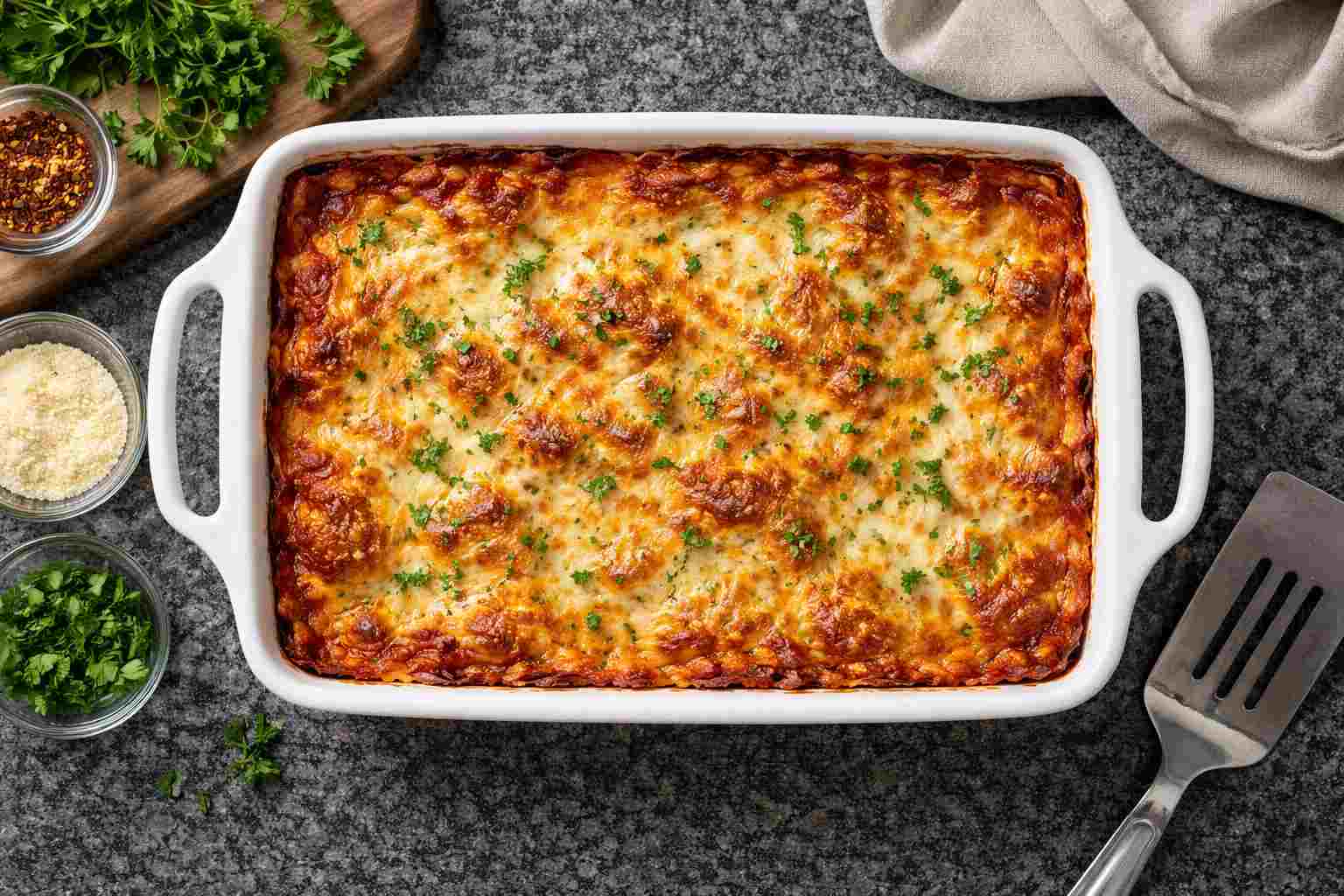
Classic Italian Lasagna

The classic cheesy, hearty Italian casserole
Prep Time 3 hours 30 minutes
Cook Time 30 minutes
Total Time 4 hours
Servings: 4 people
Course: Main Course
Cuisine: Italian
Calories: 510

Ingredients
  

  • For the Ragù Meat Sauce
  • 1 pound Ground Beef 80/20 lean-to-fat ratio
  • 1/2 pound Ground Pork
  • 2 tablespoons Vegetable Oil
  • 3 tablespoons Unsalted Butter
  • 1 medium Yellow Onion finely minced
  • 2 medium Carrots finely minced
  • 2 ribs Celery finely minced
  • 3 cloves Garlic minced
  • 1/4 cup Tomato Paste
  • 1 can 28 ounces Crushed Tomatoes
  • 1 cup Whole Milk
  • 1 cup Dry White Wine or additional beef broth
  • 1 cup Beef Broth
  • 1 teaspoon Salt
  • 1/2 teaspoon Black Pepper
  • For the Béchamel White Sauce
  • 4 tablespoons Unsalted Butter
  • 1/4 cup All-Purpose Flour
  • 4 cups Whole Milk room temperature
  • 1/2 teaspoon Salt
  • 1/4 teaspoon Ground Nutmeg
  • For Assembly
  • 1 box 1 pound Dry Lasagna Noodles (Traditional or No-Boil)
  • 1 cup Grated Parmesan Cheese
  • 1 tablespoon Unsalted Butter for greasing the pan

Method
 

  1. Begin by heating the vegetable oil and 3 tablespoons of butter in a large heavy-bottomed pot or Dutch oven over medium heat.
  2. Add the minced onion, carrot, and celery (the soffritto).
  3. Sauté these vegetables for about 8 to 10 minutes until they are soft and translucent, but not browned.
  4. Increase the heat to medium-high and add the ground beef and ground pork.
  5. Use a wooden spoon to break the meat into very small crumbles.
  6. Cook until the meat is no longer pink and has started to brown slightly.
  7. Stir in the tomato paste and garlic, cooking for another 2 minutes
  8. Pour in the white wine (if using) or a splash of broth to deglaze the pan, scraping up any browned bits from the bottom.
  9. Once the liquid has mostly evaporated, pour in the 1 cup of whole milk.
  10. Simmer the milk with the meat until it has evaporated.
  11. Finally, add the crushed tomatoes and the beef broth.
  12. Reduce the heat to the lowest setting and simmer, partially covered, for at least 2 to 3 hours.
  13. In a medium saucepan, melt 4 tablespoons of butter over medium-low heat.
  14. Once the butter is foaming, whisk in the all-purpose flour.
  15. Cook this mixture (the roux) for about 2 minutes, stirring constantly to remove the "raw" flour taste without letting it brown.
  16. Slowly pour in the whole milk, one cup at a time, whisking vigorously after each addition to prevent lumps.
  17. Continue to cook and stir over medium heat until the sauce thickens enough to coat the back of a spoon.
  18. Remove from heat and stir in the salt and nutmeg.
  19. Cover the surface directly with plastic wrap to prevent a skin from forming.
  20. If using traditional dry lasagna noodles, bring a large pot of salted water to a boil.
  21. Cook the noodles for 2 minutes less than the package directions
  22. Drain and lay them out in a single layer on clean kitchen towels or parchment paper to prevent sticking.
  23. Preheat your oven to 375°F (190°C). Grease a 9x13-inch baking dish with butter.
  24. Base Layer: Spread a thin layer of ragù on the bottom of the dish.
  25. Pasta: Place a layer of noodles over the sauce, slightly overlapping them.
  26. Sauce Duo: Spread a layer of ragù over the pasta, followed by a thin, even layer of béchamel.
  27. Cheese: Sprinkle a generous tablespoon of Parmesan cheese over the béchamel.
  28. Repeat: Repeat these layers until all ingredients are used, usually resulting in 5 to 6 layers.
  29. The Crown: The final layer should be a generous coating of béchamel topped with the remaining Parmesan cheese.
  30. Cover the baking dish tightly with aluminum foil, ensuring the foil does not touch the cheese (you can use toothpicks to prop it up).
  31. Bake for 25 minutes.
  32. Remove the foil and bake for an additional 15 to 20 minutes, or until the top is bubbling and deep golden brown.
Notes

Safety & Disclaimer

Technical Safety Warnings

  • The "Danger Zone": All perishable ingredients, including the meat ragù, béchamel, and cheese, must be kept out of the temperature danger zone of 40°F (4°C) to 140°F (60°C). Do not leave the lasagna on the counter for more than two hours.
  • Bacillus Cereus Risk: Cooked pasta is a high-risk vehicle for Bacillus cereus. This bacterium can form heat-resistant spores if the lasagna is cooled too slowly at room temperature. To store, divide the lasagna into smaller portions and refrigerate promptly once the initial resting period is over.
  • Internal Reheating Temperature: For food safety compliance, any leftovers must be reheated to a minimum internal temperature of 165°F (74°C) as measured by a calibrated food thermometer to ensure any pathogens are destroyed.

Legal Disclaimer

The information provided in this article is for educational and culinary research purposes only. Actual cooking results may vary based on equipment, ingredient quality, and altitude. Always follow local health department guidelines regarding the preparation and storage of meat and dairy products.

Culinary Notes & SEO Tips

  • Storage: This lasagna tastes even better the next day. It can be refrigerated for up to 4 days or frozen (tightly wrapped) for up to 3 months.
  • Vegetable Swaps: For a "Green Lasagna" (Lasagna Verde), use spinach-infused lasagna sheets. You can also add finely chopped spinach to the béchamel.
  • Consistency Check: If your béchamel becomes too thick while sitting, simply whisk in a tablespoon of warm milk to loosen it before assembly.
  • Efficiency Tip: You can prepare the ragù up to two days in advance. Cold ragù is actually easier to spread during the assembly phase.
For best flavor, use high-quality or organic ingredients where possible.