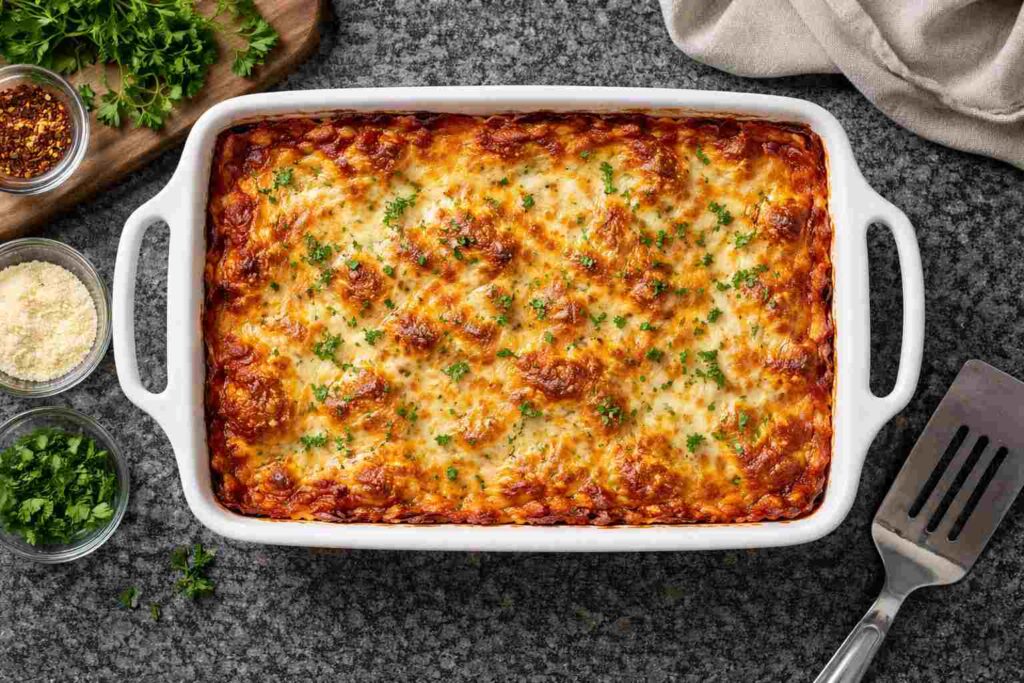
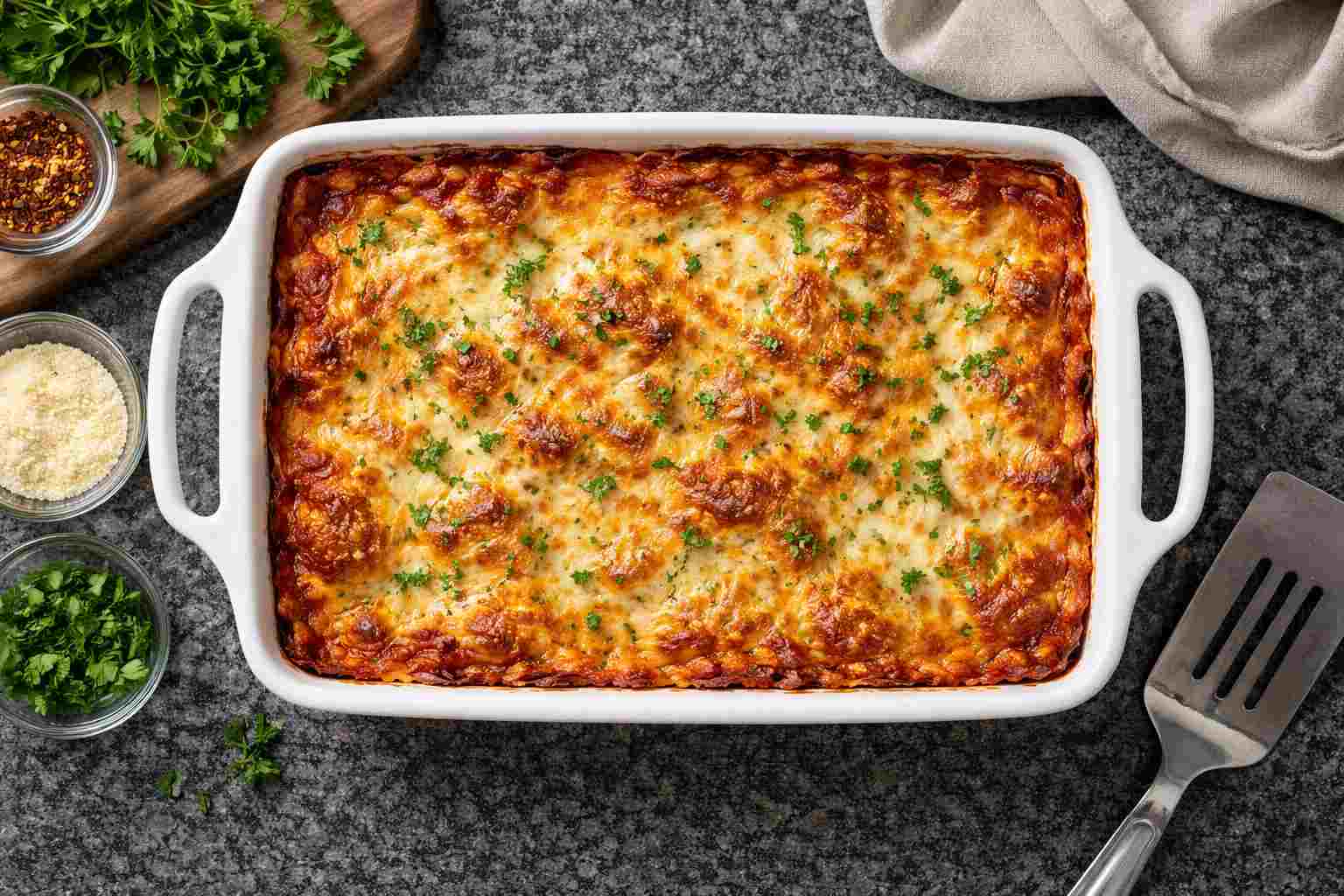
Authentic Italian lasagna, specifically the world-renowned Lasagna alla Bolognese from the Emilia-Romagna region, is a masterpiece of culinary engineering. Unlike the Italian-American versions commonly found in many households that rely heavily on ricotta cheese and thick layers of mozzarella, the authentic version is a delicate balance of rich meat ragù, silky béchamel sauce, and thin layers of pasta. This dish is not merely a recipe; it is a study in thermal dynamics and structural integrity. To master it, one must understand that the lasagna is a multi-layered composite material. Each layer serves a specific structural and flavor purpose, working in harmony to create a bite that is tender yet distinct.
The Science of the Perfect Layer
The physics of a great lasagna begins with hydration and starch gelatinization. When we use traditional pasta sheets, the starch granules within the wheat undergo a transformation. This process, known as gelatinization, typically begins at 140°F (60°C). However, for the pasta to achieve its ideal “al dente” texture—where it is firm to the bite but fully cooked—it must reach a thermal equilibrium of approximately 185°F (85°C). In an oven environment, the pasta sheets act as a wick, drawing moisture from both the ragù and the béchamel. If your sauces are too dry, the pasta remains brittle; if they are too watery, the lasagna loses its structural “stackability” and collapses into a soup upon serving.
Professional Insight: The “rest period” after taking the lasagna out of the oven is the most critical technical step. During these 15 to 20 minutes, the proteins in the cheese and the starches in the pasta undergo retrogradation. This allows the layers to “set,” ensuring that when you slice into the dish, the layers remain visible and intact rather than sliding apart.
Furthermore, the chemistry of the sauces must be balanced. A traditional ragù is tomato-based, which introduces acidity. For the béchamel (a fat-in-water emulsion) to remain stable, the overall pH of the dish should ideally sit between 6.45 and 6.56. If the ragù is excessively acidic (a pH lower than 4.5), the acid can cause the casein proteins in the milk-based béchamel to curdle during the long baking process, resulting in a grainy texture rather than a creamy one. By slow-cooking the ragù and using milk within the meat sauce itself, we buffer that acidity, creating a harmonious environment for the béchamel to thrive.
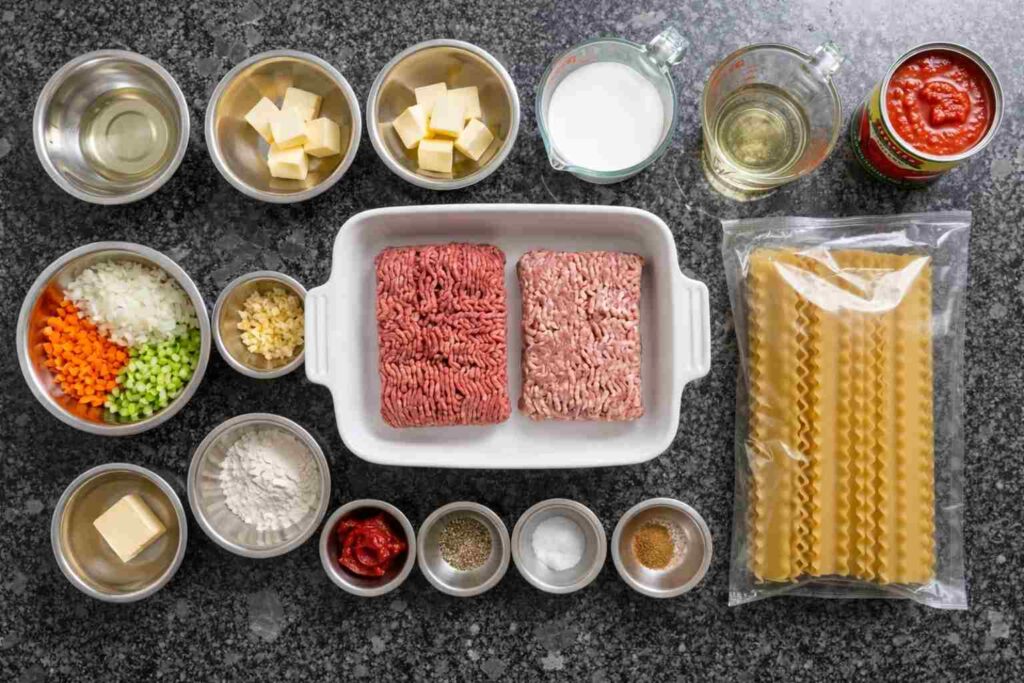
Ingredients
For the Ragù (Meat Sauce)
- 1 pound Ground Beef (80/20 lean-to-fat ratio)
- 1/2 pound Ground Pork
- 2 tablespoons Vegetable Oil
- 3 tablespoons Unsalted Butter
- 1 medium Yellow Onion, finely minced
- 2 medium Carrots, finely minced
- 2 ribs Celery, finely minced
- 3 cloves Garlic, minced
- 1/4 cup Tomato Paste
- 1 can (28 ounces) Crushed Tomatoes
- 1 cup Whole Milk
- 1 cup Dry White Wine (or additional beef broth)
- 1 cup Beef Broth
- 1 teaspoon Salt
- 1/2 teaspoon Black Pepper
For the Béchamel (White Sauce)
- 4 tablespoons Unsalted Butter
- 1/4 cup All-Purpose Flour
- 4 cups Whole Milk, room temperature
- 1/2 teaspoon Salt
- 1/4 teaspoon Ground Nutmeg
For Assembly
- 1 box (1 pound) Dry Lasagna Noodles (Traditional or No-Boil)
- 1 cup Grated Parmesan Cheese
- 1 tablespoon Unsalted Butter (for greasing the pan)
Instructions
Step 1: Crafting the Ragù alla Bolognese
Begin by heating the vegetable oil and 3 tablespoons of butter in a large heavy-bottomed pot or Dutch oven over medium heat. Add the minced onion, carrot, and celery (the soffritto). Sauté these vegetables for about 8 to 10 minutes until they are soft and translucent, but not browned. This creates the aromatic base of the sauce.
Increase the heat to medium-high and add the ground beef and ground pork. Use a wooden spoon to break the meat into very small crumbles. Cook until the meat is no longer pink and has started to brown slightly. Stir in the tomato paste and garlic, cooking for another 2 minutes to caramelize the sugars in the paste.
Pour in the white wine (if using) or a splash of broth to deglaze the pan, scraping up any browned bits from the bottom. Once the liquid has mostly evaporated, pour in the 1 cup of whole milk. Simmer the milk with the meat until it has evaporated—this step protects the meat from the acidity of the tomatoes, ensuring a tender texture. Finally, add the crushed tomatoes and the beef broth. Reduce the heat to the lowest setting and simmer, partially covered, for at least 2 to 3 hours. The sauce should be thick and rich. Season with salt and pepper to taste.
Step 2: Preparing the Béchamel Sauce
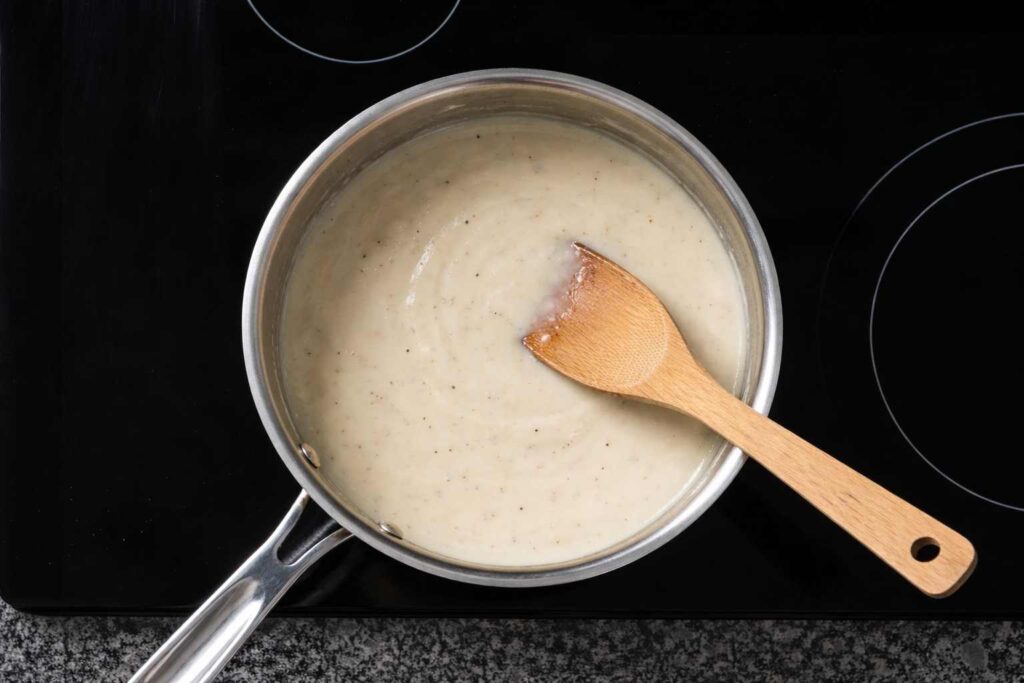
In a medium saucepan, melt 4 tablespoons of butter over medium-low heat. Once the butter is foaming, whisk in the all-purpose flour. Cook this mixture (the roux) for about 2 minutes, stirring constantly to remove the “raw” flour taste without letting it brown.
Slowly pour in the whole milk, one cup at a time, whisking vigorously after each addition to prevent lumps. Continue to cook and stir over medium heat until the sauce thickens enough to coat the back of a spoon. This usually takes about 8 to 12 minutes. Remove from heat and stir in the salt and nutmeg. Cover the surface directly with plastic wrap to prevent a skin from forming.
Step 3: Managing the Pasta
If using traditional dry lasagna noodles, bring a large pot of salted water to a boil. Cook the noodles for 2 minutes less than the package directions (they should be quite firm, as they will finish cooking in the oven). Drain and lay them out in a single layer on clean kitchen towels or parchment paper to prevent sticking. If using “no-boil” noodles, ensure your ragù and béchamel are slightly thinner to provide the necessary hydration for the pasta to soften.
Step 4: The Assembly Process
Preheat your oven to 375°F (190°C). Grease a 9×13-inch baking dish with butter.
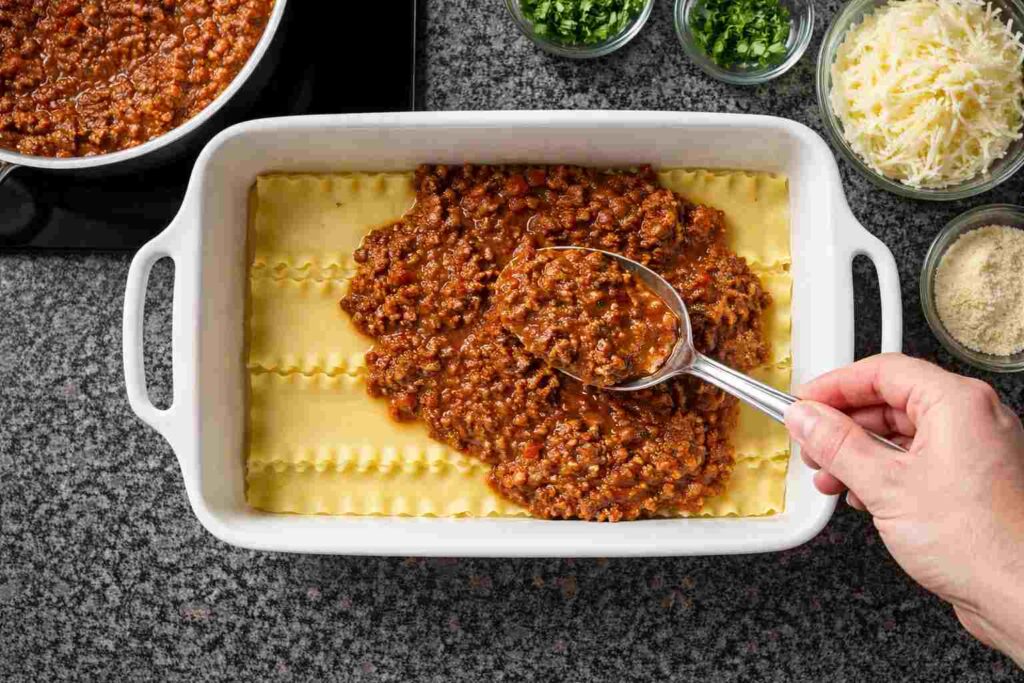
- Base Layer: Spread a thin layer of ragù on the bottom of the dish.
- Pasta: Place a layer of noodles over the sauce, slightly overlapping them.
- Sauce Duo: Spread a layer of ragù over the pasta, followed by a thin, even layer of béchamel.
- Cheese: Sprinkle a generous tablespoon of Parmesan cheese over the béchamel.
- Repeat: Repeat these layers until all ingredients are used, usually resulting in 5 to 6 layers.
- The Crown: The final layer should be a generous coating of béchamel topped with the remaining Parmesan cheese. This creates the iconic golden-brown crust.
Step 5: Thermal Execution (Baking)
Cover the baking dish tightly with aluminum foil, ensuring the foil does not touch the cheese (you can use toothpicks to prop it up). Bake for 25 minutes. Remove the foil and bake for an additional 15 to 20 minutes, or until the top is bubbling and deep golden brown.
Professional Insight: For a perfectly browned top, you can turn on the broiler for the last 2 minutes of cooking, but watch it closely to prevent burning.
Step 6: The Rest Period
Remove the lasagna from the oven. Do not attempt to slice it immediately. Allow the dish to sit undisturbed for 20 minutes. As mentioned in the science brief, this allows the internal temperature to reach equilibrium and the starches to set, ensuring perfect, clean slices.
Safety & Disclaimer
Technical Safety Warnings
- The “Danger Zone”: All perishable ingredients, including the meat ragù, béchamel, and cheese, must be kept out of the temperature danger zone of 40°F (4°C) to 140°F (60°C). Do not leave the lasagna on the counter for more than two hours.
- Bacillus Cereus Risk: Cooked pasta is a high-risk vehicle for Bacillus cereus. This bacterium can form heat-resistant spores if the lasagna is cooled too slowly at room temperature. To store, divide the lasagna into smaller portions and refrigerate promptly once the initial resting period is over.
- Internal Reheating Temperature: For food safety compliance, any leftovers must be reheated to a minimum internal temperature of 165°F (74°C) as measured by a calibrated food thermometer to ensure any pathogens are destroyed.
Legal Disclaimer
The information provided in this article is for educational and culinary research purposes only. Actual cooking results may vary based on equipment, ingredient quality, and altitude. Always follow local health department guidelines regarding the preparation and storage of meat and dairy products.
Culinary Notes & SEO Tips
- Storage: This lasagna tastes even better the next day. It can be refrigerated for up to 4 days or frozen (tightly wrapped) for up to 3 months.
- Vegetable Swaps: For a “Green Lasagna” (Lasagna Verde), use spinach-infused lasagna sheets. You can also add finely chopped spinach to the béchamel.
- Consistency Check: If your béchamel becomes too thick while sitting, simply whisk in a tablespoon of warm milk to loosen it before assembly.
- Efficiency Tip: You can prepare the ragù up to two days in advance. Cold ragù is actually easier to spread during the assembly phase.
For best flavor, use high-quality or organic ingredients where possible.