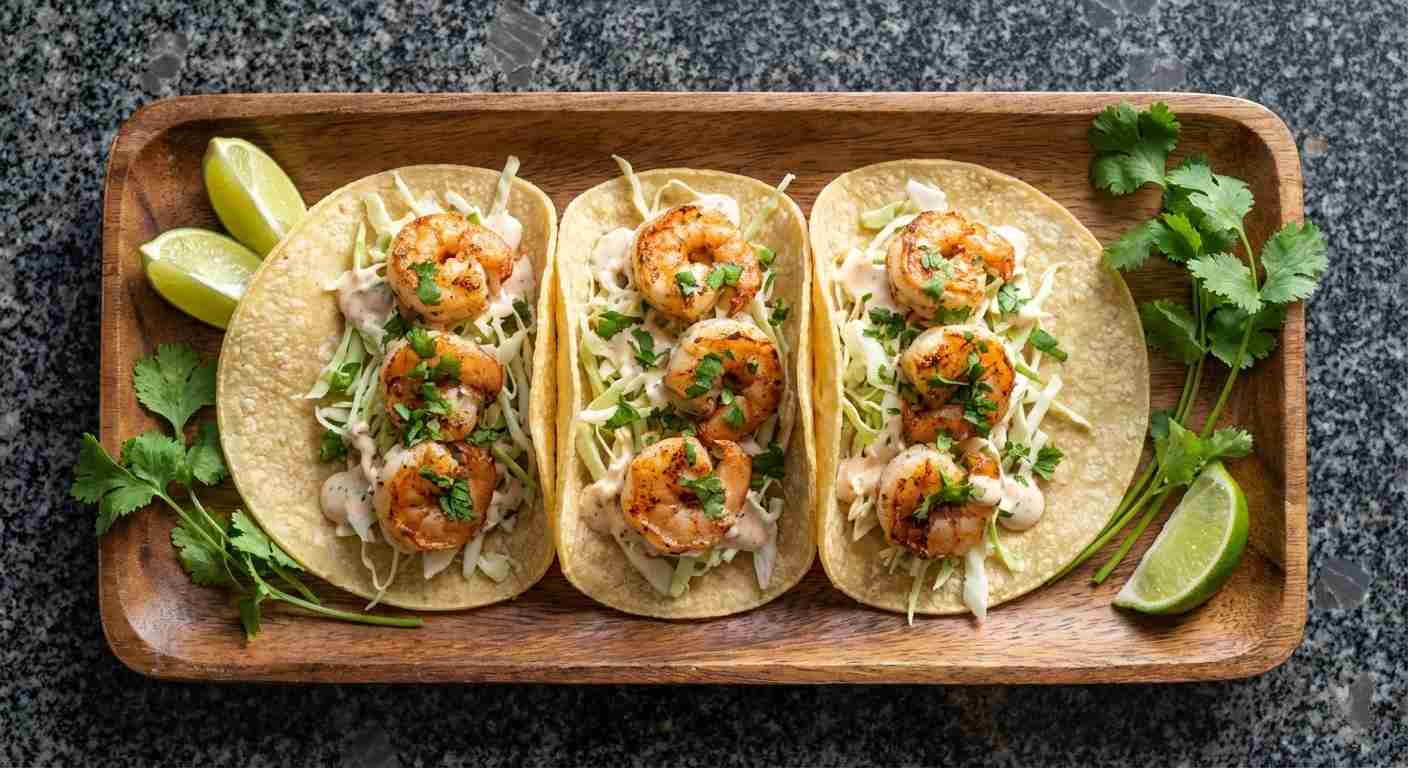
The Story and Science of the Perfect Refreshing Taco
The shrimp taco is more than just a quick weeknight meal; it is a masterclass in the balance of texture, temperature, and chemical brightness. When we describe a dish as “refreshing,” we are often reacting to a specific interplay between the pH of the ingredients and the hydration of the components. In the culinary world, achieving this “refreshing” profile requires an understanding of how proteins react to heat and how acids interact with our taste receptors.
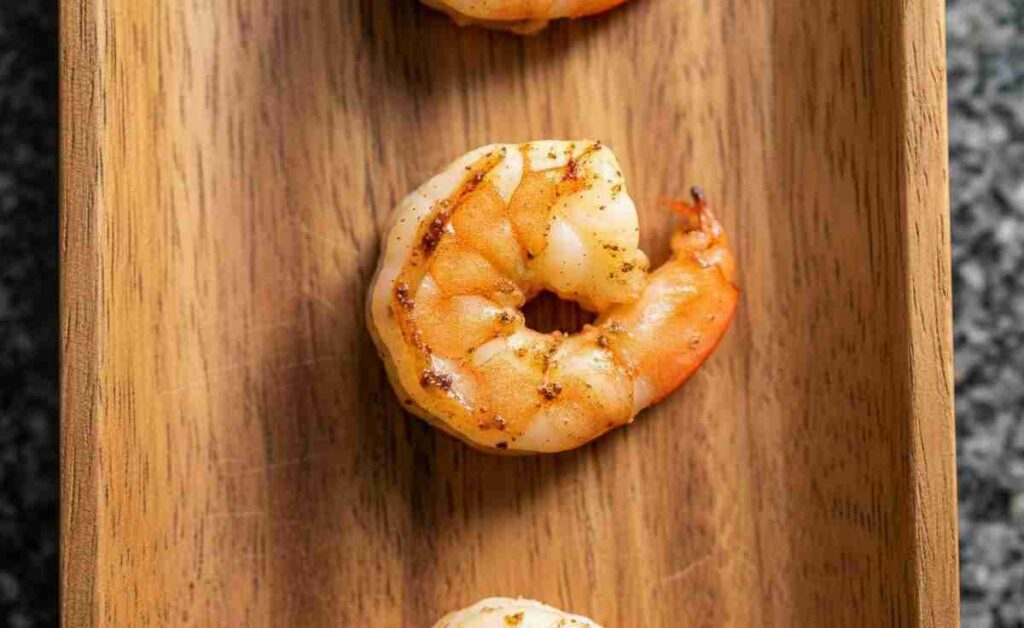
From a scientific perspective, shrimp are unique proteins. They are composed of roughly 80% water and 20% protein, specifically myosin and actin. Because they lack the heavy connective tissue found in land-based proteins like beef, their thermal conductivity is remarkably high. This means heat travels through a shrimp almost instantly. When you apply heat, these proteins undergo denaturation and coagulation between 120°F and 145°F. This is where the “C” shape comes from. A perfectly cooked shrimp forms a loose “C.” If the protein continues to cook toward 155°F, the cross-linking becomes too tight, squeezing out the internal moisture and resulting in a rubbery, “O” shaped shrimp. Professional insight: The goal for a “refreshing” taco is to stop the cooking process at the exact moment the protein becomes opaque, preserving the internal hydration that provides a juicy snap.
The “refreshing” sensation is further enhanced by the pH levels of the dish. Raw shrimp is nearly neutral in pH, but as it sits, it can lean toward alkaline. By introducing lime juice—which has a low pH of about 2.2—we aren’t just adding flavor; we are triggering a sensory response. This acidity cuts through the richness of the avocado and the savory notes of the shrimp, cleaning the palate between bites.
Furthermore, the “crunch” factor is a matter of osmotic pressure. When we prepare the cabbage slaw, we are dealing with cell wall rigidity. If you salt your cabbage too early, osmosis draws the water out, causing the cell walls to collapse and the slaw to become limp. To keep the tacos refreshing, we utilize “hydration science” by keeping the vegetables chilled or even “shocking” them in ice water before assembly. This ensures that every bite provides a structural contrast to the soft tortilla and the tender shrimp.
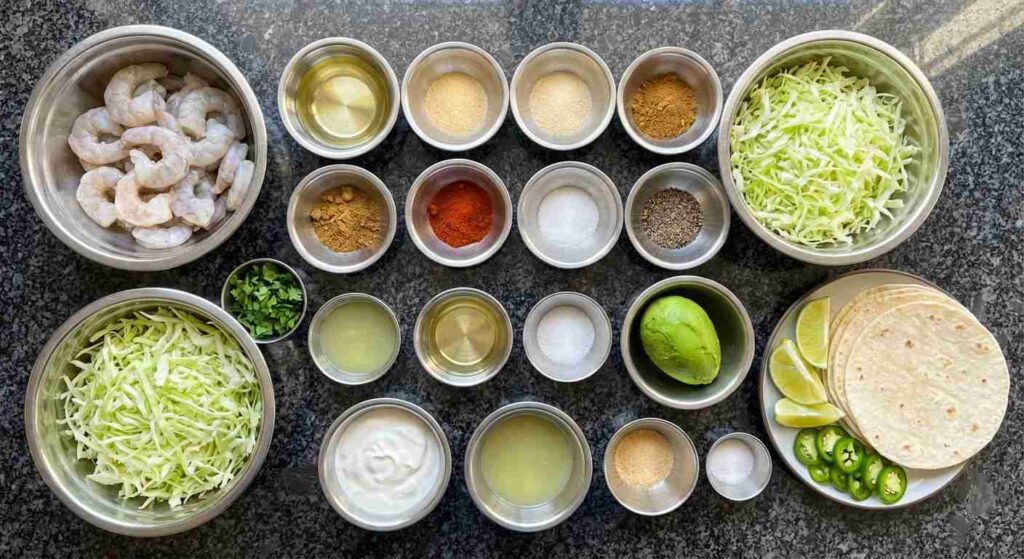
Ingredients
For the Shrimp:
- 1 pound Medium Shrimp (raw, peeled, and deveined)
- 2 tablespoons Vegetable Oil
- 1 teaspoon Garlic Powder
- 1 teaspoon Onion Powder
- 1 teaspoon Ground Cumin
- 1/2 teaspoon Smoked Paprika
- 1/2 teaspoon Salt
- 1/4 teaspoon Black Pepper
For the Zesty Slaw:
- 2 cups Green Cabbage (finely shredded)
- 1/4 cup Fresh Cilantro (chopped)
- 2 tablespoons Lime Juice
- 1 tablespoon Vegetable Oil
- 1/4 teaspoon Salt
For the Avocado Crema:
- 1 large Avocado (pitted and peeled)
- 1/2 cup Sour Cream
- 1 tablespoon Lime Juice
- 1/4 teaspoon Garlic Powder
- 1/8 teaspoon Salt
For Assembly:
- 8 to 12 Small Flour or Corn Tortillas
- 1 Lime (cut into wedges for serving)
- Optional: 1 Jalapeno (thinly sliced)
Detailed Instructions
Step 1: Prepare the “Refreshing” Base (The Slaw)
The slaw needs a moment for the flavors to marry, but not so long that it loses its structural integrity. In a large mixing bowl, combine the shredded cabbage and chopped cilantro. In a small separate bowl, whisk together the lime juice, vegetable oil, and salt. Do not pour the dressing over the cabbage until about 10 minutes before you are ready to eat. This timing prevents the salt from drawing out too much moisture via osmosis, keeping the cabbage crisp and “refreshing.” Set the bowl in the refrigerator to keep the vegetable cell walls rigid.
Step 2: Create the Avocado Crema
In a food processor or using a sturdy whisk and a bowl, mash the avocado until smooth. Incorporate the sour cream, lime juice, garlic powder, and salt. Whisk vigorously until the mixture is aerated and light. The acid in the lime juice serves a dual purpose here: it provides the “bright” flavor profile required for a refreshing dish and acts as an antioxidant to prevent the avocado from browning. If the mixture is too thick, add one teaspoon of water at a time until it reaches a “drizzlable” consistency. Cover and refrigerate immediately.
Step 3: Prep the Shrimp for Searing
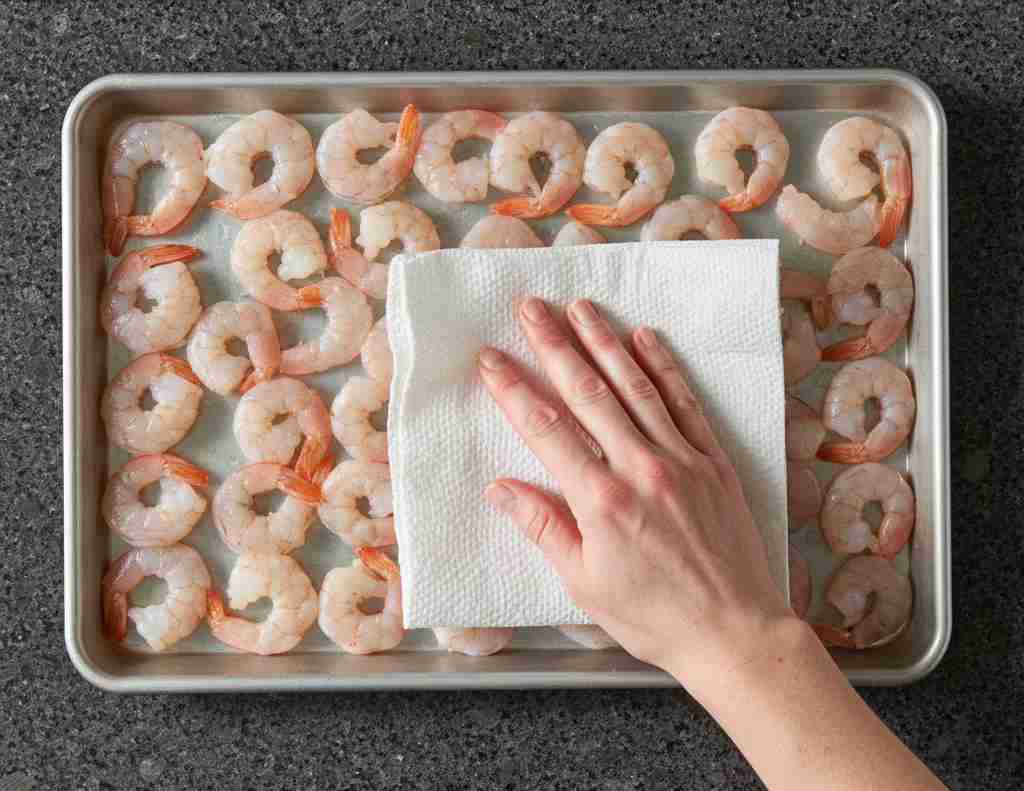
Take your peeled and deveined shrimp and place them on a layer of paper towels. Pat them dry thoroughly on both sides. This is a critical technical step. Any surface moisture on the shrimp will turn to steam when it hits the pan, preventing the Maillard reaction (browning). Once dry, place the shrimp in a bowl and toss with the garlic powder, onion powder, cumin, smoked paprika, salt, pepper, and one tablespoon of the vegetable oil. Ensure each shrimp is evenly coated in the spice rub.
Step 4: The High-Heat Sear
Place a large skillet or cast-iron pan over medium-high heat. Add the remaining tablespoon of vegetable oil. Once the oil is shimmering (but not smoking), add the shrimp in a single layer. Do not overcrowd the pan; work in batches if necessary. Crowding the pan drops the temperature, causing the shrimp to boil in their own juices rather than sear.
Cook the shrimp for 90 seconds on the first side without moving them. You will see the edges turn pink and opaque. Flip the shrimp and cook for another 60 to 90 seconds. Use a digital thermometer to ensure the thickest part of the shrimp has reached 145°F. Once they form a “C” shape, remove them immediately from the pan to a clean plate. Do not leave them in the hot pan, as the residual heat will continue to cook them into a rubbery state.
Step 5: Warm the Tortillas
To enhance the aroma of the taco, warm the tortillas directly over a low gas flame for 5–10 seconds per side using tongs, or in a dry skillet over medium heat. You are looking for a few light brown spots and a pliable texture. Keep the warmed tortillas wrapped in a clean kitchen towel to maintain heat and moisture through steam.
Step 6: Final Assembly
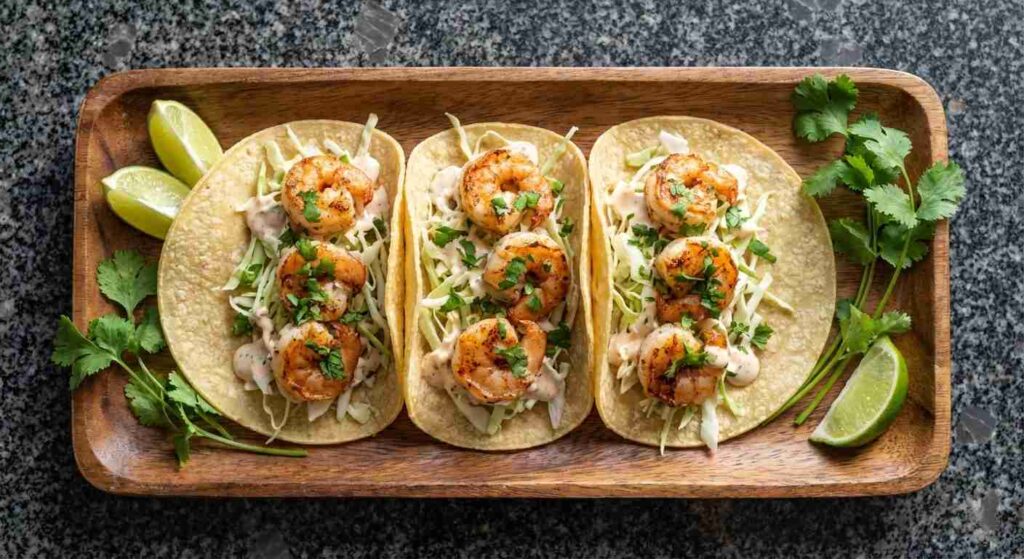
Retrieve the slaw and the crema from the refrigerator. Toss the cabbage with its dressing now. Lay out a warm tortilla. Place a generous spoonful of the zesty slaw in the center. Top with 3 or 4 seared shrimp. Drizzle the avocado crema over the top. Professional insight: Placing the slaw at the bottom creates a thermal barrier, protecting the cold crema from the hot shrimp for a few extra moments, which maximizes the “refreshing” temperature contrast in the first bite.
Troubleshooting and Professional Tips
- The Rubbery Shrimp Fail: If your shrimp are tough, they have surpassed 155°F. Next time, pull them off the heat when they are slightly translucent in the center of the “thick” part; the carry-over heat will finish the job safely.
- The Soggy Tortilla: If your tacos are falling apart, you may have too much moisture in your slaw. Use a slotted spoon to serve the cabbage, leaving the excess lime juice and water in the bowl.
- Air Fryer Method: For a quicker weeknight version, you can cook the seasoned shrimp in an air fryer at 400°F for 5 to 7 minutes, shaking the basket halfway through. This provides a consistent “snap” to the protein without the need for constant monitoring at the stove.
- Flavor Swaps: If you prefer a fruitier profile, replace half of the cabbage in the slaw with diced mango or pineapple. The natural sugars in the fruit complement the smokiness of the paprika and cumin.
- Storage: Seared shrimp can be stored in an airtight container in the refrigerator for up to 2 days. However, for the best “refreshing” quality, always prepare the slaw and crema fresh. Do not freeze the assembled tacos or the avocado crema, as the texture of the dairy and produce will degrade significantly.
Safety & Disclaimer: According to USDA and FDA guidelines, shrimp must be cooked to a minimum internal temperature of 145°F (63°C) for at least 15 seconds to ensure the destruction of pathogens such as Salmonella and Vibrio. This recipe contains shellfish (shrimp), which is a major allergen; ensure all guests are aware of the ingredients. To prevent cross-contamination, maintain strict separation between raw shrimp and “ready-to-eat” components like tortillas, cabbage, and crema. The information provided is for educational purposes. Consuming raw or undercooked seafood may increase your risk of foodborne illness, especially if you have certain medical conditions. Always use a calibrated food thermometer to verify safety.