Bruschetta is more than just a toasted snack; it is a masterclass in the balance of textures and the chemistry of fresh produce. At its heart, the dish relies on the relationship between toasted bread and the acidic brightness of macerated tomatoes. To understand why some bruschetta turns soggy while others maintains a crisp, resonant crunch, we must look at the science of the Maillard reaction and thermal conductivity. When we apply radiant heat to a slice of bread—ideally a crusty loaf found at any local grocery store—we are initiating a complex chemical interaction between amino acids and reducing sugars. This reaction, occurring at approximately 285°F (140°C), creates the golden-brown crust and the distinct toasted aroma that defines the base of the dish.
The structure of the bread is equally vital. High-hydration doughs, such as ciabatta or certain baguettes, feature large air pockets. These pockets are not merely aesthetic; they serve as reservoirs for olive oil and the juices released by the tomatoes. Interestingly, the process of “staling,” or starch retrogradation, can actually work in a cook’s favor. Slightly stale bread has a lower free-water content, which allows it to toast more evenly and absorb fats without the structural matrix collapsing into mush. This is the difference between a soggy piece of toast and a robust platform for your toppings.
On the topping side, we deal with pH dynamics. Tomatoes typically fall between a pH of 4.2 and 4.9. When we dice them and salt them, we are using osmosis to draw out excess moisture, concentrating the sugars and organic acids like citric and malic acid. This prevents the bread from becoming oversaturated while intensifying the flavor profile. The addition of balsamic vinegar, which sits at a sharp pH of 2.5, provides a bright counterpoint to the richness of the olive oil.
Ingredients
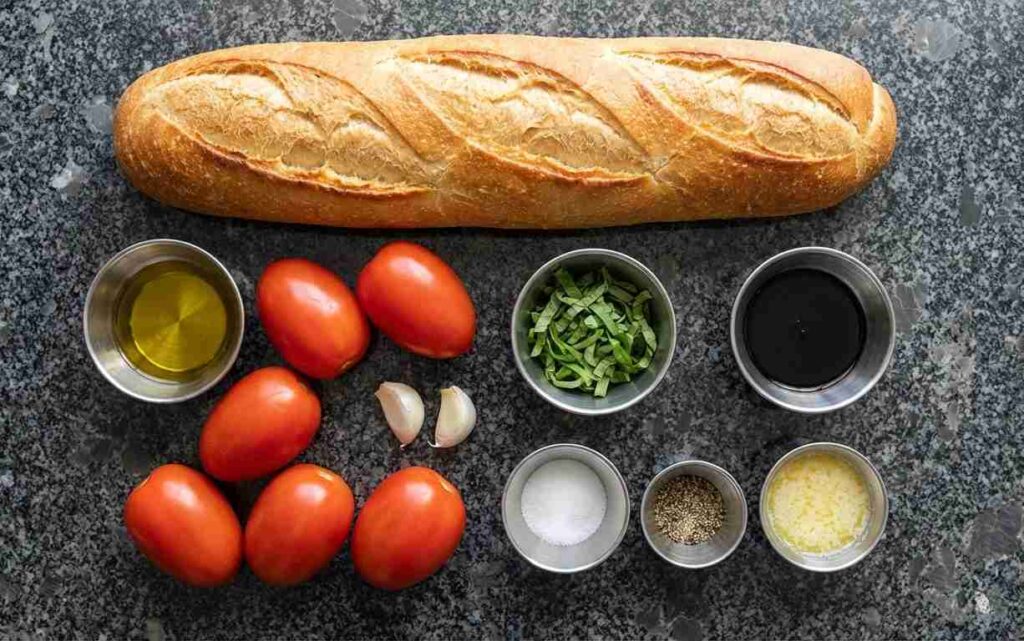
- 1 large loaf of French bread or Italian-style Baguette
- 6 medium-sized Roma tomatoes (approximately 1.5 lbs)
- 2 cloves of fresh garlic, peeled and left whole
- 1/4 cup Extra Virgin Olive Oil
- 1/4 cup fresh basil leaves, thinly sliced (chiffonade)
- 2 tablespoons Balsamic Vinegar
- 1 teaspoon Salt
- 1/2 teaspoon Black Pepper
- 1/4 cup Unsalted Butter (melted, for optional brushing)
Instructions
1. Prepare the Tomatoes: Begin by washing your tomatoes thoroughly under cool running water. This is a critical step to mitigate the risk of Salmonella. Once dry, core the tomatoes and dice them into small, uniform pieces (about 1/4 inch). Place the diced tomatoes into a mesh strainer set over a bowl. Sprinkle with 1/2 teaspoon of salt and let them sit for 15 to 20 minutes. This process of osmosis draws out the excess water that would otherwise ruin the crispness of your bread.
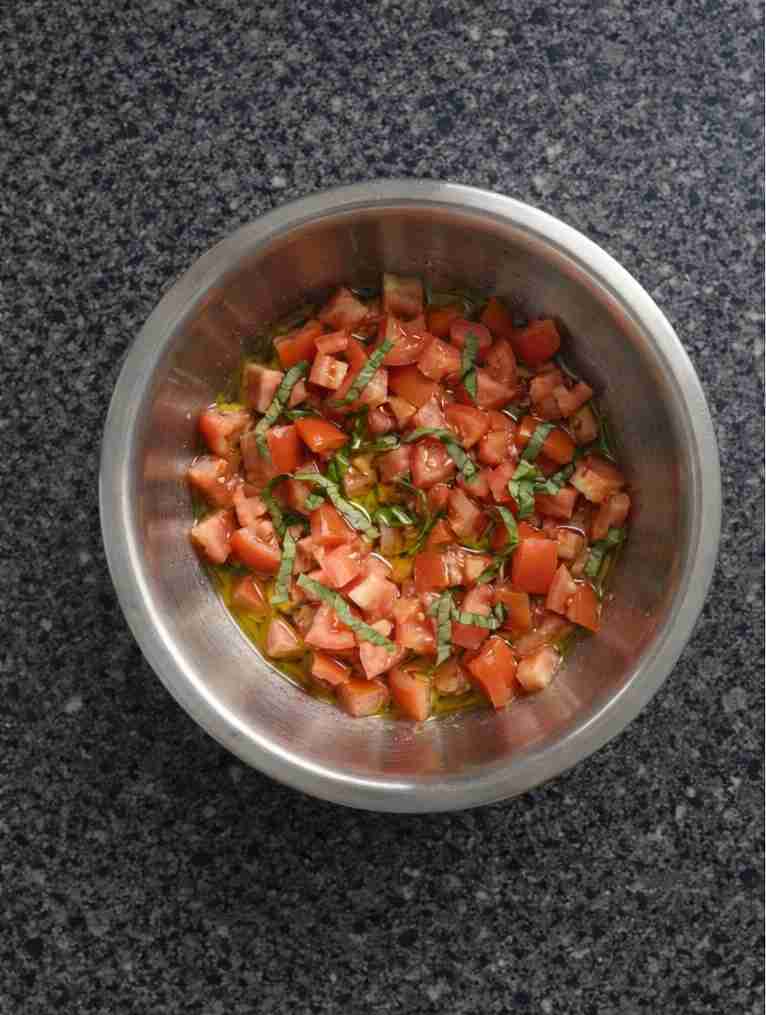
2. Macerate the Topping: Transfer the drained tomatoes to a clean mixing bowl. Add the balsamic vinegar, black pepper, and the remaining salt. Slowly fold in the thinly sliced basil. By adding the basil last, you prevent the leaves from bruising and turning black from the acidity of the vinegar. Set this mixture aside at room temperature for at least 30 minutes to allow the flavors to marry.
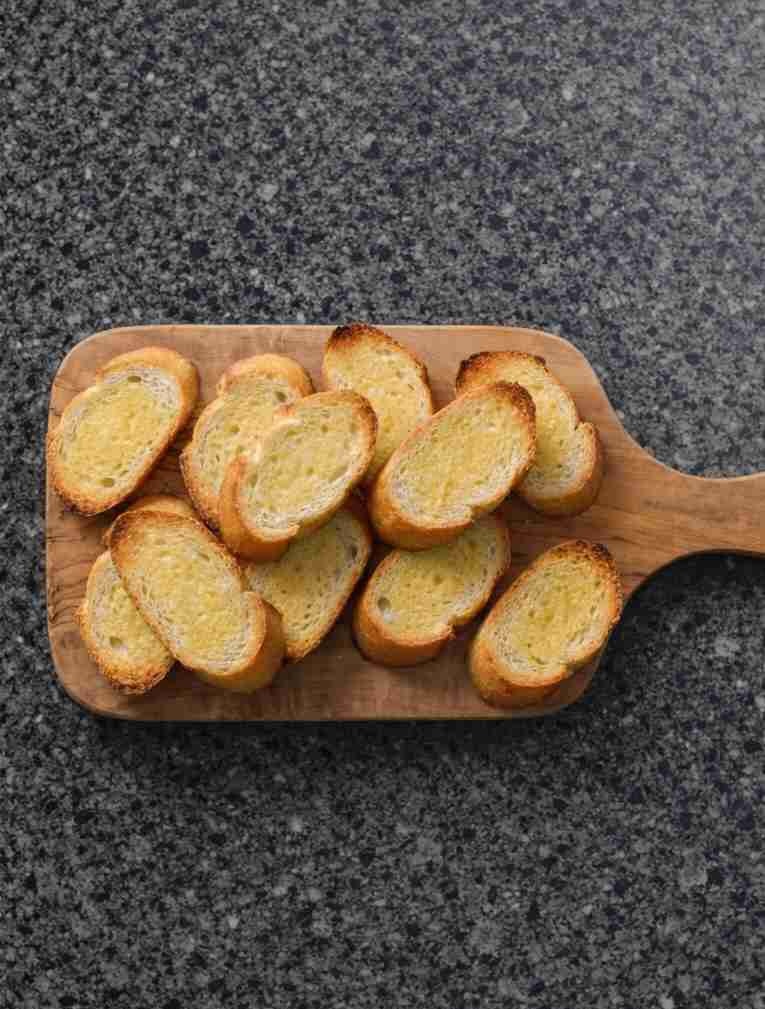
3. Prepare the Bread: Preheat your oven to 400°F (200°C) or prepare a grill pan over medium-high heat. Slice your bread on a slight diagonal into 1/2-inch thick rounds. This diagonal cut increases the surface area for the toppings. If you prefer a richer flavor, lightly brush one side of each slice with melted unsalted butter or a small amount of olive oil.
4. The Toasting Process: Place the bread slices on a baking sheet in a single layer. Slide them into the oven for 5 to 7 minutes. You are looking for the Maillard reaction to take hold, turning the edges golden brown while the center remains slightly elastic. The surface temperature needs to hit that 285°F mark to ensure the moisture has evaporated from the crust.
5. The Garlic Infusion: This is the traditional Italian method for adding flavor without the bitterness of raw minced garlic. While the bread is still hot and its surface is abrasive, take your peeled garlic cloves and rub them directly onto the toasted side of each slice. The heat and the rough texture of the bread will act like a grater, melting a thin, aromatic layer of garlic into the crust.
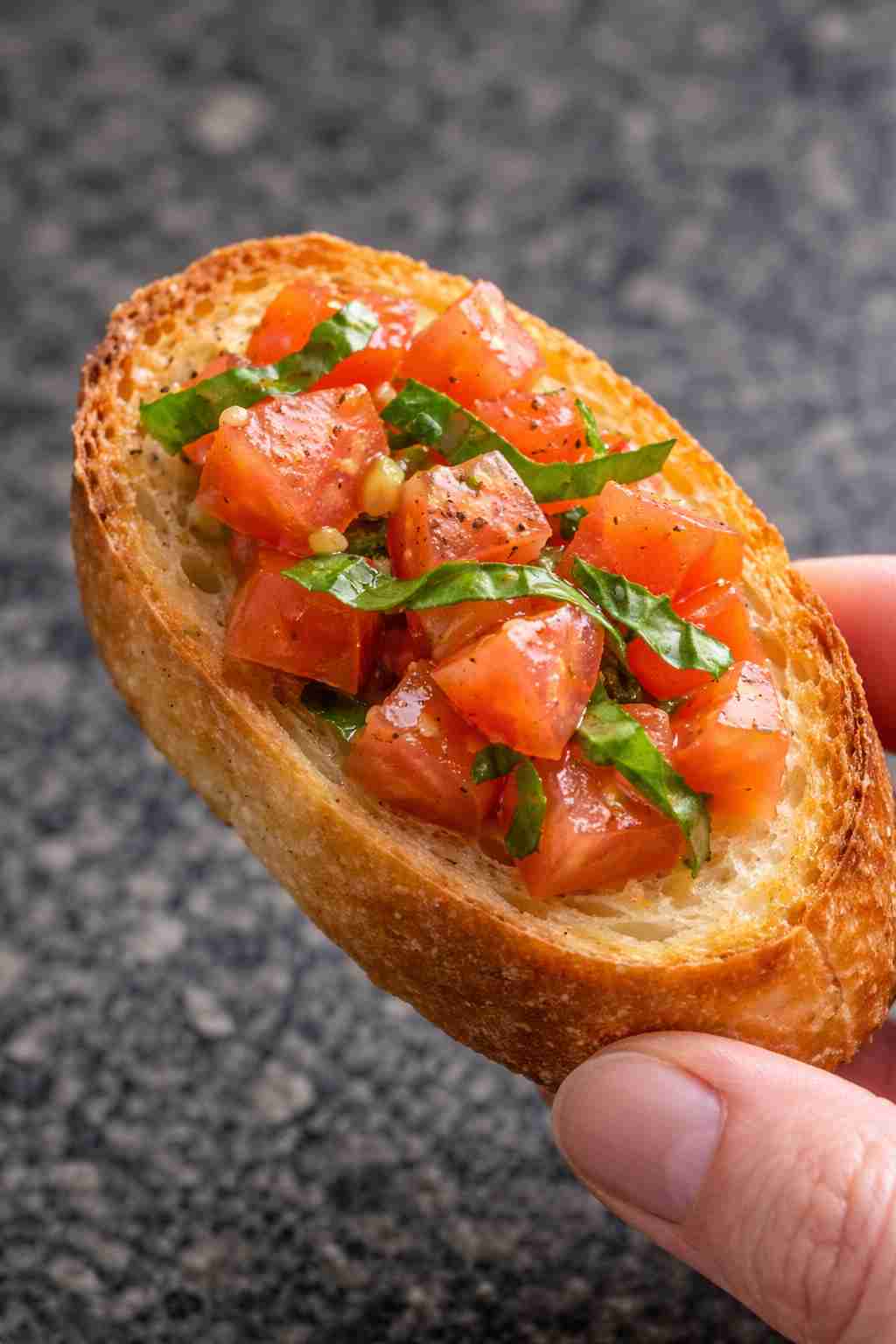
6. Assembly: Just before serving, give your tomato mixture a final stir. Using a slotted spoon to avoid picking up any residual liquid, mound a generous tablespoon of the tomatoes onto each slice of bread. Drizzle a small amount of extra virgin olive oil over the top of each.
7. Final Garnish: Add a tiny pinch of fresh basil on top for color and serve immediately.