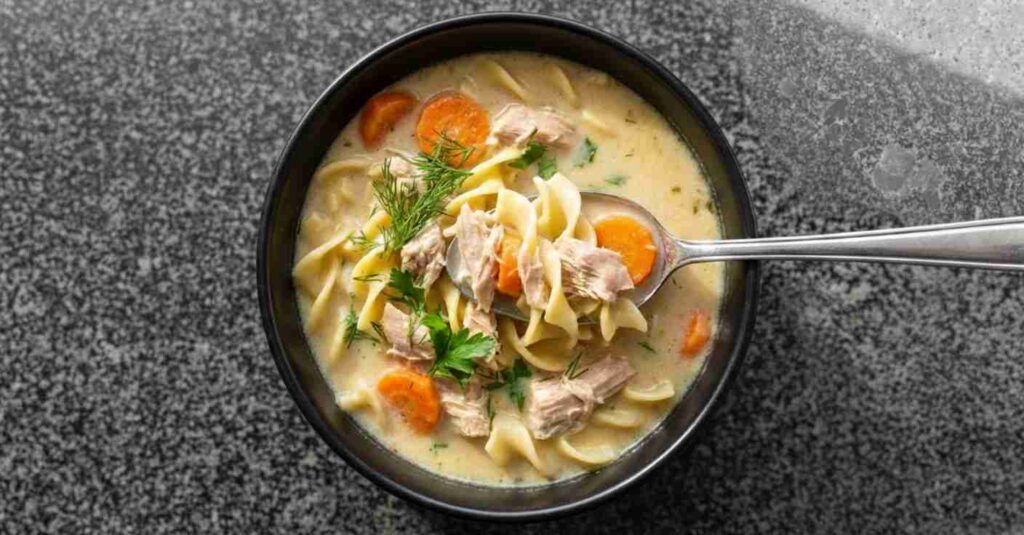
Creamy chicken noodle soup is more than just a meal; it is a culinary hug, a universal remedy for the common cold, and a staple of the busy kitchen. While a traditional clear broth chicken soup relies on a light, translucent base, the creamy version introduces a luxurious texture that elevates the dish into a hearty, one-pot wonder. To master this recipe, one must understand that the difference between a mediocre soup and a masterpiece lies in the balance of physics and flavor. We aren’t just boiling water and adding meat; we are managing an emulsion, controlling starch hydration, and navigating the delicate chemistry of dairy stability.
The Science of the Simmer
From a professional perspective, the success of a creamy soup depends heavily on its pH levels. Most chicken noodle soups sit in a slightly acidic range, typically between 5.8 and 6.4. This is the “sweet spot” for stability. If you introduce too much acidity—such as a splash of lemon juice or a heavy hand of vinegar—too early in the process, the pH can drop below 4.6. When this happens, the proteins in your heavy cream or milk will denature and coagulate, leading to a “broken” soup where the fat separates and the liquid looks curdled. Professional insight: Always save your acidic finishers for the very end, just before serving, once the soup has been pulled from the direct heat.
Furthermore, we must consider thermal conductivity. Because creamy soups have a higher viscosity than clear broths, they behave differently on the stove. The presence of lipids (fats) and amylopectin (starches from the flour and noodles) creates a thicker boundary layer at the bottom of your pot. In a thin broth, natural convection moves the heat around efficiently. In a creamy soup, heat transfer relies on forced convection—which is a fancy way of saying you must stir frequently. Without constant movement, the starches will settle at the bottom and scorch, ruining the entire batch with a burnt aftertaste.
Finally, there is the phenomenon of starch retrogradation. Have you ever noticed that your leftover soup turns into a semi-solid gel in the refrigerator? This is because noodles are hydroscopic; they continue to absorb liquid even after the heat is turned off. The starches released from the pasta act as a secondary thickener, but as they cool, they form a crystalline structure that traps the liquid. Understanding this allows us to cook our noodles to a specific “al dente” state, ensuring they maintain their structural integrity through the cooling and reheating process.
Ingredients
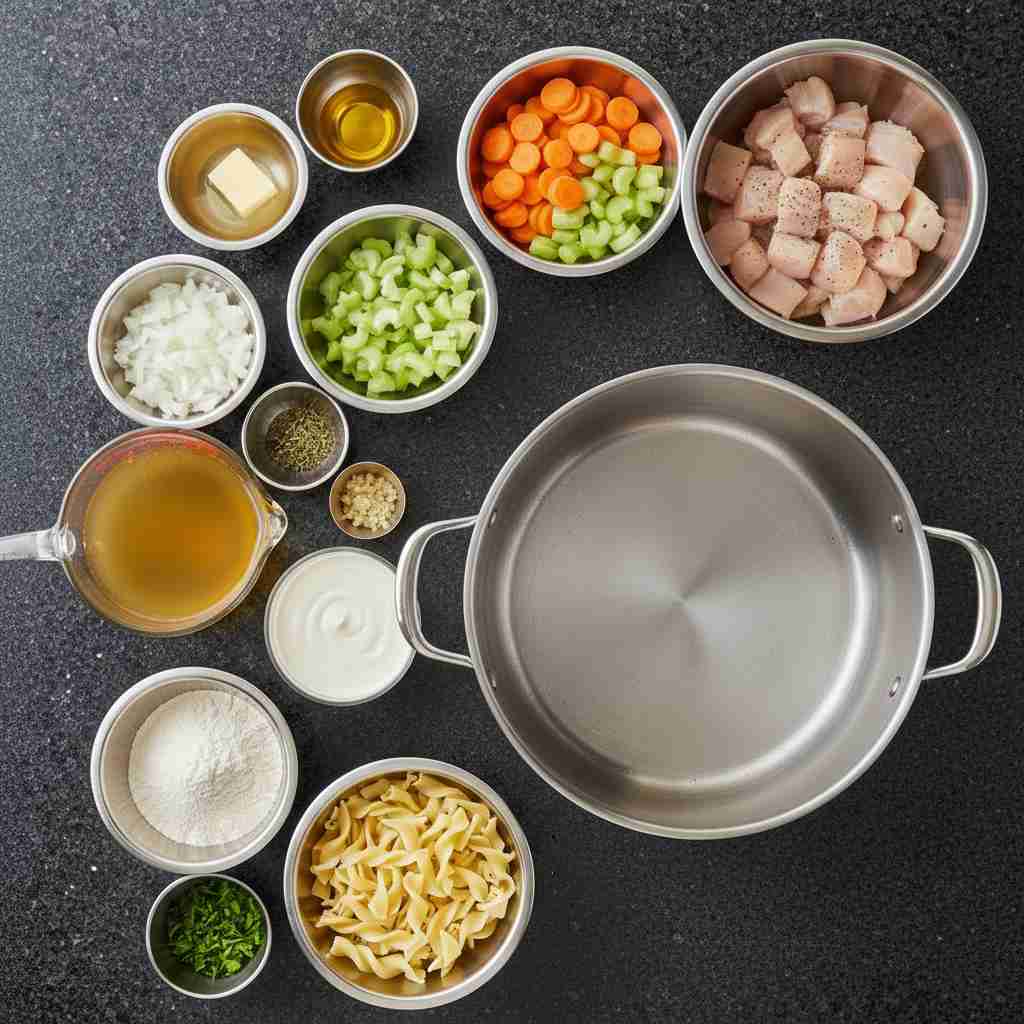
The Base * 2 tablespoons Unsalted Butter * 1 tablespoon Vegetable Oil * 1.5 lbs Boneless Skinless Chicken Breasts (cut into 1-inch cubes) * 1 teaspoon Salt (plus more to taste) * 1/2 teaspoon Black Pepper
The Aromatics * 1 large Yellow Onion (finely diced) * 3 medium Carrots (peeled and sliced into rounds) * 3 ribs Celery (sliced) * 4 cloves Garlic (minced) * 1 teaspoon Dried Thyme * 1 teaspoon Dried Oregano
The Thickener & Liquid * 1/3 cup All-Purpose Flour * 6 cups Chicken Broth * 1 cup Heavy Cream * 2 cups Wide Egg Noodles (uncooked) * 1 tablespoon Chopped Fresh Parsley (for garnish)
Step-by-Step Instructions
Phase 1: Searing the Protein
- Place a large Dutch oven or heavy-bottomed stockpot over medium-high heat. Add the vegetable oil and one tablespoon of the unsalted butter. The combination of oil and butter allows for a higher smoke point while still providing the rich flavor of the dairy.
- Season your cubed chicken breasts with salt and pepper. Once the butter is foaming, add the chicken to the pot in a single layer.
- Professional Insight: Do not crowd the pan. If necessary, sear the chicken in two batches. You are looking for a light golden-brown crust—this is the Maillard reaction in action, which creates a deep, savory foundation for your broth. Remove the chicken from the pot and set it aside on a plate; it does not need to be cooked through at this stage.
Phase 2: Developing the Mirepoix
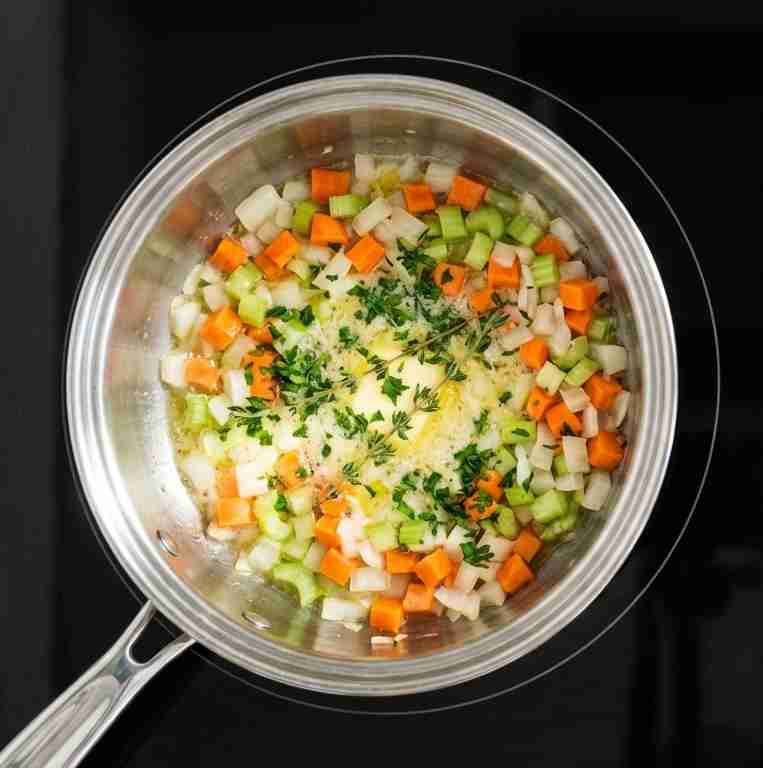
- Lower the heat to medium and add the remaining tablespoon of butter to the same pot. Add the diced onion, carrots, and celery. Use a wooden spoon to scrape the bottom of the pot (deglazing), picking up the “fond” or browned bits left behind by the chicken.
- Sauté the vegetables for about 6 to 8 minutes until the onions are translucent and the carrots have softened slightly. Add the minced garlic, dried thyme, and dried oregano. Cook for an additional 60 seconds until the garlic is fragrant, being careful not to let it brown or turn bitter.
Phase 3: The Roux and the Broth
- Sprinkle the all-purpose flour over the sautéed vegetables. Stir constantly for 2 minutes. This “blonde roux” serves as our primary thickening agent. Cooking the flour for these two minutes is essential to remove the “raw” flour taste while ensuring it doesn’t brown too much and lose its thickening power.
- Slowly pour in the chicken broth, one cup at a time. Whisk or stir vigorously after each addition to ensure the flour incorporates smoothly without forming lumps.
- Bring the mixture to a gentle boil, then return the seared chicken (and any juices from the plate) to the pot. Reduce the heat to low and simmer for 10 minutes.
Phase 4: Hydrating the Noodles
- Increase the heat slightly to maintain a steady simmer and add the wide egg noodles.
- Referencing our hydration science, cook the noodles for approximately 6 to 7 minutes, or about 2 minutes less than the package instructions suggest. The noodles will continue to cook and absorb liquid during the resting phase. If you cook them to full tenderness now, they will become mushy by the time the soup hits the table.
Phase 5: Finishing the Emulsion
- Once the noodles are “al dente,” reduce the heat to the lowest setting. Slowly pour in the heavy cream. Stir gently to incorporate.
- Allow the soup to heat through for another 2 to 3 minutes, but do not let it reach a rolling boil again. High heat after the addition of dairy can cause the fats to separate, compromising the silky texture we’ve built.
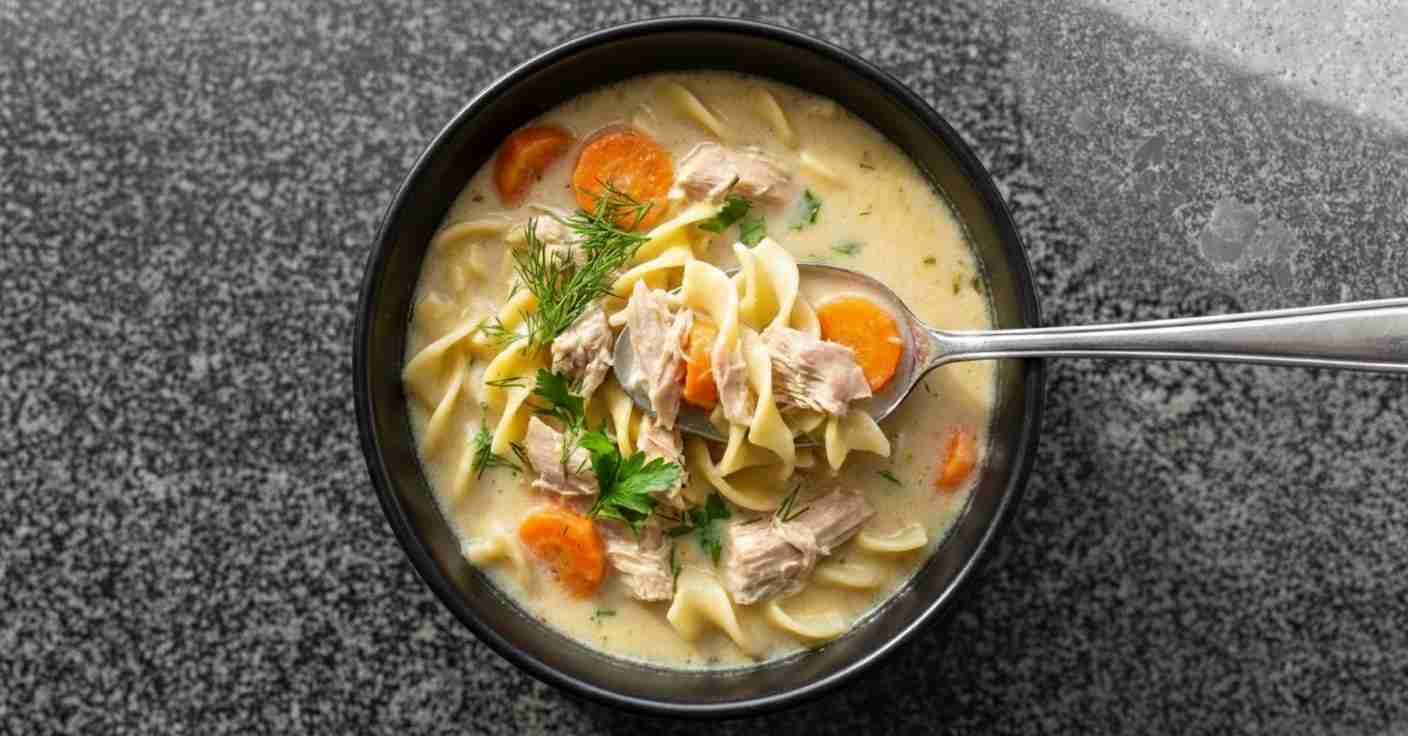
- Taste the soup and adjust the seasoning with additional salt or pepper if needed. Stir in the fresh parsley just before serving.
Troubleshooting & Professional Insights
The “Broken” Soup Fix: If your soup looks grainy or separated after adding the cream, it is likely due to a temperature shock or a pH imbalance. You can often fix this by creating a “slurry”—mix 1 teaspoon of cornstarch with 1 tablespoon of cold milk and whisk it into the simmering soup. This helps re-stabilize the emulsion.
Managing Thickening (The Overnight Gel): Because of starch retrogradation, your leftovers will be significantly thicker the next day. When reheating, do not just throw it in the microwave. Place it in a saucepan and add 1/4 cup of chicken broth or water to “loosen” the starches. Heat it slowly while stirring to restore the original viscosity.
The “One-Pot” Efficiency Tip: To maximize flavor, ensure your chicken is cut into uniform 1-inch cubes. This ensures that the chicken poaches evenly in the broth without becoming dry or rubbery while the noodles are boiling.
Safety & Disclaimer
Food Safety Warnings (USDA/CDC Standards): * Internal Temperature: Poultry components must reach a minimum internal temperature of 165°F (74°C) as measured by a food thermometer to ensure the elimination of Salmonella and Campylobacter. * Temperature Danger Zone: Creamy chicken soup is a high-risk food for bacterial growth. It must be cooled from 140°F to 70°F within 2 hours, and then from 70°F to 40°F within an additional 4 hours. * Reheating Protocol: For maximum safety, all leftovers must be reheated to a rolling boil or an internal temperature of 165°F. Do not reheat leftovers in a slow cooker, as the slow rise in temperature allows bacteria like Bacillus cereus to proliferate.
Legal Disclaimers: * Allergen Warning: This recipe contains common allergens: Dairy (Heavy Cream/Butter), Gluten (Wheat Egg Noodles/Flour), and Celery. * Nutritional Disclaimer: Nutritional values provided in any supplementary materials are estimates only. Individual results may vary based on specific ingredient brands and preparation methods. * Storage Disclaimer: Due to the high dairy content and the nature of noodle hydration, freezing this soup is not recommended. Freezing often leads to textural degradation, where the noodles become mushy and the dairy separates upon thawing. Use within 3-4 days when stored in an airtight container at or below 40°F.
For best results, use fresh ingredients available at your local grocery store.