The story of Chicken Marsala is a fascinating journey through the history of Sicilian cuisine and the evolution of global gastronomy. While many associate this dish with the red-sauce joints of mid-century America, its roots are firmly planted in the soil of Sicily, specifically the port city of Marsala. The dish is a variation of traditional “scaloppine”—thin slices of meat, usually veal or chicken, dredged in flour and sautéed in a reduction of local fortified wine. Historically, Marsala wine was fortified with grape spirits to survive long sea voyages, resulting in a rich, nutty, and slightly sweet profile that transforms when introduced to heat and savory fats. This transformation is not just culinary magic; it is a complex series of chemical reactions.
The “Why” behind the success of this dish lies in the Maillard reaction. When you dredge your chicken in all-purpose flour and place it in a hot pan with oil and butter, you are setting the stage for a chemical reaction between amino acids and reducing sugars. This creates the “fond”—those brown bits stuck to the bottom of the pan—which contains the concentrated essence of savory flavor. Science tells us that chicken breast is a lean protein with low thermal conductivity. Without the flour coating, the exterior would dry out before the interior reached the safe temperature of 165°F. The flour acts as a thermal buffer, protecting the delicate muscle fibers while simultaneously providing the starch needed for later gelatinization.
When the Marsala wine hits the hot pan, the acidity (pH 3.3 to 3.8) begins to break down the proteins in the fond, lifting them into the liquid. This process, known as deglazing, is the foundation of the sauce. As the wine reduces, the alcohol evaporates, concentrating the sugars and organic acids. The final addition of cold butter is the masterstroke of emulsification. By whisking cold fat into the hot, starch-thickened reduction, you create a stable emulsion where fat droplets are suspended in the aqueous wine base, resulting in that signature “velouté” mouthfeel that coats the back of a spoon. Understanding these principles—thermal physics, starch gelatinization, and emulsification—allows any home cook to move from simply following a recipe to mastering the art of the pan sauce.
Safety & Disclaimer
Food Safety Warning: Consuming raw or undercooked poultry may increase your risk of foodborne illness. Always ensure the chicken reaches a minimum internal temperature of 165°F (74°C) as measured by a calibrated food thermometer.
Cross-Contamination Alert: Wash all surfaces, utensils, and hands thoroughly after contact with raw chicken. Do not wash raw poultry in the sink, as this can spread bacteria via aerosolized water droplets.
Allergen Disclaimer: This recipe contains common allergens, including gluten (flour dredge), dairy (butter), and sulfites (found naturally in Marsala wine).
Legal Alcohol Disclaimer: Marsala wine is a fortified wine. While much of the alcohol content evaporates during the reduction process, trace amounts may remain. Exercise caution if serving individuals with alcohol sensitivities or strict dietary restrictions.
Ingredients
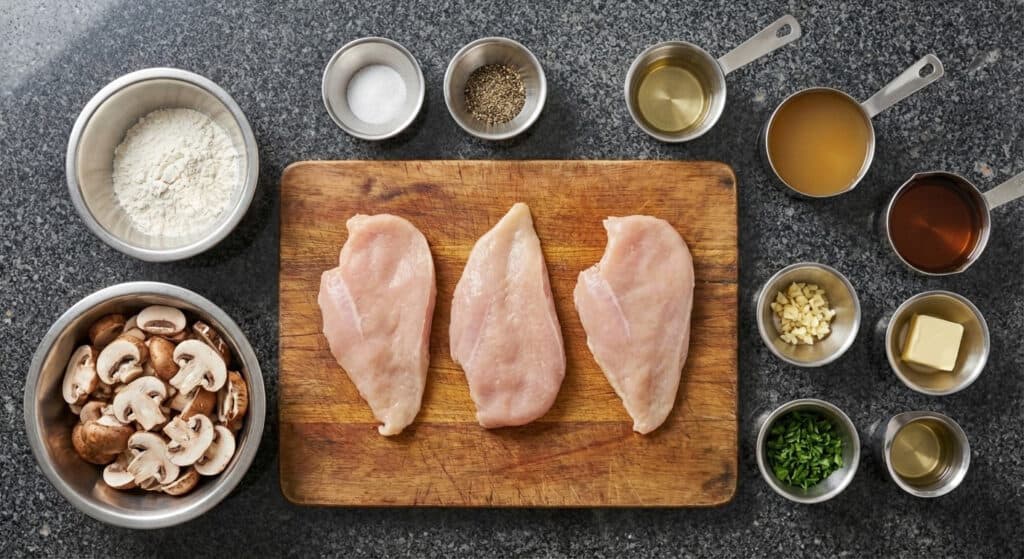
To ensure this recipe is accessible to everyone, we use standard pantry staples. These items can be found at any local grocery store.
- Chicken Breast: 1.5 lbs (about 3 large breasts), sliced horizontally and pounded to 1/2 inch thickness.
- All-Purpose Flour: 1/2 cup, for dredging.
- Salt: 1 teaspoon, plus more to taste.
- Black Pepper: 1/2 teaspoon, freshly ground.
- Vegetable Oil: 2 tablespoons (for high-heat searing).
- Unsalted Butter: 4 tablespoons, divided into two 2-tablespoon portions.
- Mushrooms: 8 oz (standard white button or cremini), sliced.
- Dry Marsala Wine: 3/4 cup (look for “Dry” rather than “Sweet” for savory dishes).
- Chicken Broth: 1/2 cup (standard low-sodium canned or boxed).
- Garlic: 2 cloves, minced.
- Fresh Parsley: 2 tablespoons, chopped (for garnish).
Detailed Instructions
1. Preparing the Protein
Begin by preparing your chicken breasts. To achieve a uniform cook, you must ensure a uniform thickness. Place the chicken pieces between two sheets of plastic wrap or in a heavy-duty gallon bag. Using a meat mallet or the bottom of a heavy skillet, gently pound the chicken until it is a consistent 1/2 inch thick. This step is non-negotiable for “Easy Savory Chicken Marsala,” as it ensures the meat reaches 165°F simultaneously across the entire piece, preventing the edges from becoming rubbery while the center remains raw.
2. The Seasoning and Dredge
In a shallow bowl or a pie plate, combine the 1/2 cup of all-purpose flour with the 1 teaspoon of salt and 1/2 teaspoon of black pepper. Pat the pounded chicken dry with paper towels. Moisture is the enemy of the Maillard reaction; if the chicken is wet, it will steam rather than sear. Dredge each piece of chicken in the flour mixture, shaking off any excess. You want a light, translucent coating, not a thick batter.
3. The Initial Sear
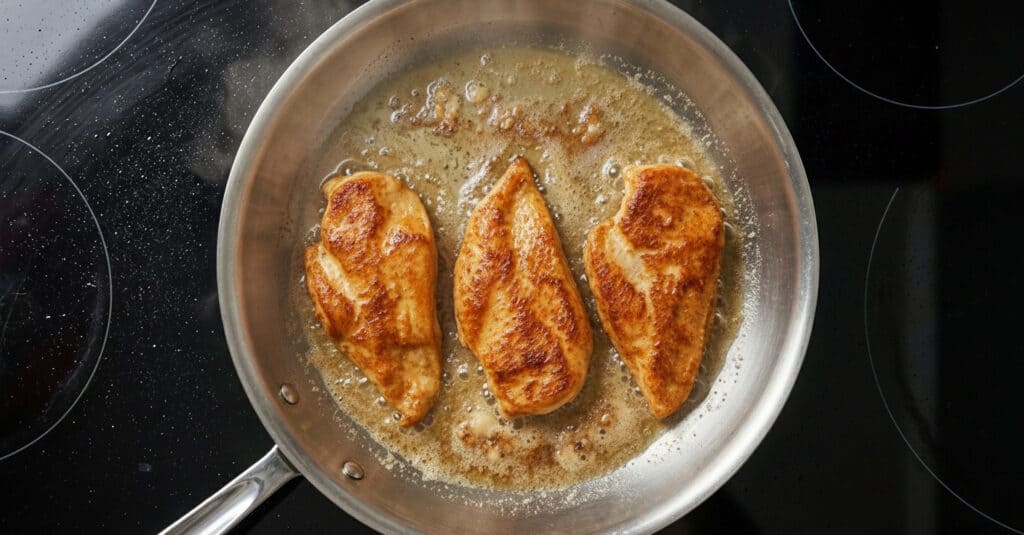
Place a large stainless steel or cast-iron skillet over medium-high heat. Add the 2 tablespoons of vegetable oil and the first 2 tablespoons of unsalted butter. The oil raises the smoke point of the butter, allowing for a better sear without burning the dairy solids. Once the butter is foaming and the pan is hot, add the chicken in a single layer. Do not overcrowd the pan; if necessary, work in batches. Sear the chicken for 3 to 4 minutes per side until deeply golden brown. Use a calibrated food thermometer to check that the internal temperature has reached 165°F. Remove the chicken to a plate and tent loosely with foil to keep warm.
4. Sautéing the Mushrooms
In the same skillet (do not wipe it out!), add the remaining 2 tablespoons of butter. Once melted, add the sliced mushrooms. The mushrooms will initially absorb the fat and then release their moisture. Resist the urge to move them constantly. Let them sit for 2 minutes to develop color, then stir. Once the mushrooms are browned and their liquid has evaporated, add the minced garlic. Sauté for only 30 to 60 seconds until fragrant, being careful not to burn the garlic, which would introduce a bitter profile to the sauce.
5. Deglazing and Reduction
Pour the 3/4 cup of dry Marsala wine into the pan. Use a wooden spoon or a whisk to scrape the bottom of the skillet vigorously. This is the deglazing process, where the acidity of the wine releases the flavorful fond into the sauce. Add the 1/2 cup of chicken broth. Increase the heat slightly to bring the liquid to a simmer. Allow the sauce to reduce by about half, which should take 5 to 7 minutes. As the liquid evaporates, the starch from the chicken’s flour coating (which remained in the pan fat) will begin the process of starch gelatinization, thickening the sauce into a light gravy.
6. The Final Emulsification
Once the sauce has thickened and the sharp smell of raw alcohol has dissipated, turn the heat to low. Return the chicken and any accumulated juices on the plate back into the skillet. Spoon the sauce over the chicken and let it simmer for 1 to 2 minutes to reheat the protein and marry the flavors. This is where the professional “velouté” texture is finalized. The proteins from the chicken and the starches in the pan combine with the reduction to create a glossy, savory coating.
7. Finishing and Serving
Taste the sauce. If it needs more salt or a hit of acid, add a tiny pinch of salt or a drop of lemon juice (optional). Garnish with the fresh chopped parsley. The green brightness of the parsley provides a visual and flavor contrast to the deep, earthy tones of the mushrooms and wine. Serve immediately over a bed of egg noodles, mashed potatoes, or alongside crusty bread to soak up every drop of the sauce.
Professional Insights: Troubleshooting & Tips
- The Sauce is Too Thin: If your sauce hasn’t thickened after reducing, it may be because there wasn’t enough flour left in the pan. You can fix this by whisking together 1 teaspoon of cornstarch with 1 teaspoon of cold water (a slurry) and stirring it into the simmering sauce.
- The Sauce is Too Thick: Simply whisk in an extra tablespoon or two of chicken broth or water until the desired consistency is reached.
- The Mushroom Choice: While we use standard white or cremini mushrooms for accessibility, the science remains the same. Mushrooms are high in umami (glutamates), which reinforces the “savory” profile of the Marsala wine.
- Wine Selection: Always use a wine you would be willing to drink. “Cooking wines” found in the vinegar aisle often contain high levels of added sodium which can ruin the balance of the dish. A standard bottle of dry Marsala from the wine section is the professional choice.
Storage and Reheating
Leftover Chicken Marsala can be stored in an airtight container in the refrigerator for up to 3 days. To reheat, place the chicken and sauce in a skillet over low heat with a splash of chicken broth to loosen the sauce. Avoid the microwave if possible, as it can cause the chicken to become rubbery and the sauce to break (separate).
Chicken_Marsala
- Chicken Breast: 1.5 lbs (about 3 large breasts, sliced horizontally and pounded to 1/2 inch thickness.)
- All-Purpose Flour: 1/2 cup (for dredging.)
- Salt: 1 teaspoon (plus more to taste.)
- Black Pepper: 1/2 teaspoon (freshly ground.)
- Vegetable Oil: 2 tablespoons (for high-heat searing.)
- Unsalted Butter: 4 tablespoons (divided into two 2-tablespoon portions.)
- Mushrooms: 8 oz (standard white button or cremini, sliced.)
- Dry Marsala Wine: 3/4 cup (look for “Dry” rather than “Sweet” for savory dishes.)
- Chicken Broth: 1/2 cup (standard low-sodium canned or boxed.)
- Garlic: 2 cloves (minced.)
- Fresh Parsley: 2 tablespoons (chopped (for garnish).)
- Prepare chicken by pounding to an even thickness
- In a shallow bowl or a pie plate, combine the 1/2 cup of all-purpose flour with the 1 teaspoon of salt and 1/2 teaspoon of black pepper.
- Pat the pounded chicken dry with paper towels.
Dredge each piece of chicken in the flour mixture, shaking off any excess. You want a light, translucent coating, not a thick batter.
- Place a large stainless steel or cast-iron skillet over medium-high heat.
- Add the 2 tablespoons of vegetable oil and the first 2 tablespoons of unsalted butter.
- Once the butter is foaming and the pan is hot, add the chicken in a single layer. Do not overcrowd the pan
- Sear the chicken for 3 to 4 minutes per side until deeply golden brown. Use a calibrated food thermometer to check that the internal temperature has reached 165°F.
- Remove the chicken to a plate and tent loosely with foil to keep warm.
- In the same skillet (do not wipe it out!), add the remaining 2 tablespoons of butter.
- Once melted, add the sliced mushrooms. The mushrooms will initially absorb the fat and then release their moisture.
- Resist the urge to move them constantly. Let them sit for 2 minutes to develop color, then stir.
- Once the mushrooms are browned and their liquid has evaporated, add the minced garlic.
- Sauté for only 30 to 60 seconds until fragrant, being careful not to burn the garlic
- Pour the 3/4 cup of dry Marsala wine into the pan. Use a wooden spoon or a whisk to scrape the bottom of the skillet vigorously.
- Add the 1/2 cup of chicken broth. Increase the heat slightly to bring the liquid to a simmer.
- Allow the sauce to reduce by about half, which should take 5 to 7 minutes.
- Once the sauce has thickened and the sharp smell of raw alcohol has dissipated, turn the heat to low.
- Return the chicken and any accumulated juices on the plate back into the skillet.
- Spoon the sauce over the chicken and let it simmer for 1 to 2 minutes to reheat the protein and marry the flavors.
- Taste the sauce. If it needs more salt or a hit of acid, add a tiny pinch of salt or a drop of lemon juice (optional).
- Garnish with the fresh chopped parsley.
- Serve immediately over a bed of egg noodles, mashed potatoes, or alongside crusty bread to soak up every drop of the sauce.
Professional Insights: Troubleshooting & Tips
- The Sauce is Too Thin: If your sauce hasn’t thickened after reducing, it may be because there wasn’t enough flour left in the pan. You can fix this by whisking together 1 teaspoon of cornstarch with 1 teaspoon of cold water (a slurry) and stirring it into the simmering sauce.
- The Sauce is Too Thick: Simply whisk in an extra tablespoon or two of chicken broth or water until the desired consistency is reached.
- The Mushroom Choice: While we use standard white or cremini mushrooms for accessibility, the science remains the same. Mushrooms are high in umami (glutamates), which reinforces the “savory” profile of the Marsala wine.
- Wine Selection: Always use a wine you would be willing to drink. “Cooking wines” found in the vinegar aisle often contain high levels of added sodium which can ruin the balance of the dish. A standard bottle of dry Marsala from the wine section is the professional choice.
Storage and Reheating
Leftover Chicken Marsala can be stored in an airtight container in the refrigerator for up to 3 days. To reheat, place the chicken and sauce in a skillet over low heat with a splash of chicken broth to loosen the sauce. Avoid the microwave if possible, as it can cause the chicken to become rubbery and the sauce to break (separate).